
What Is IGF-1 LR3? Complete Research Peptide Guide
IGF-1 LR3 (1mg) lyophilized research peptide vial with COA verification,

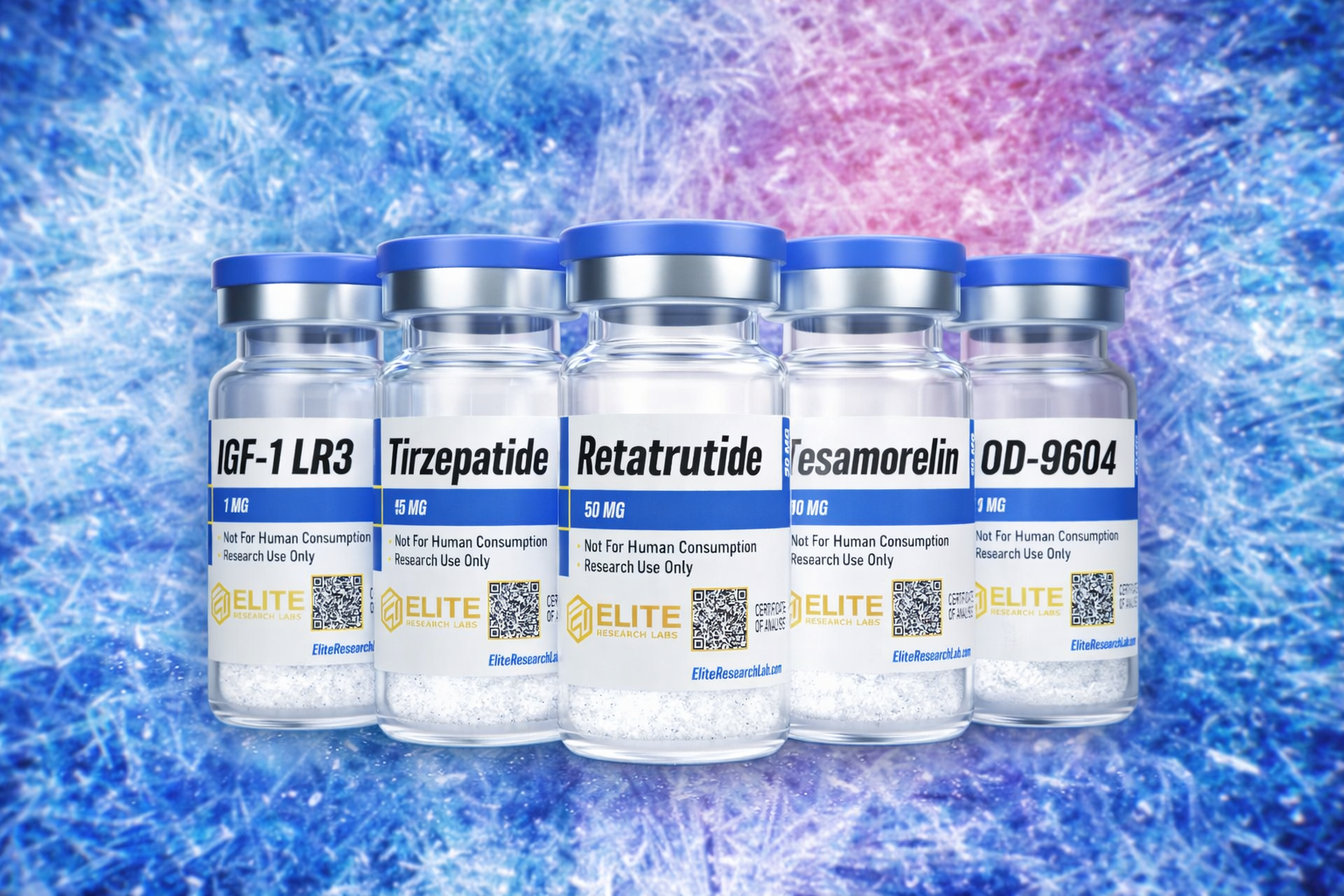
Proper storage of research peptides is essential for maintaining stability, purity, and reliable experimental results. Following correct storage practices helps prevent degradation and ensures consistent outcomes in laboratory research.
Proper storage is one of the most important factors in maintaining the integrity of research peptides.
Even when peptides are synthesized to high standards, improper handling or environmental exposure can impact stability and compromise research consistency.
Peptide storage directly affects experimental accuracy, reproducibility, and long-term usability of research materials.
Understanding peptide stability in research settings is essential for ensuring that materials perform as expected across experiments.
This guide outlines the key principles of storing research peptides in laboratory environments while maintaining compliance with research-use-only standards.
Explore our research-grade peptides
Peptides are sensitive compounds that can degrade when exposed to unfavorable conditions such as heat, moisture, and light. Improper storage can lead to:
Degraded peptides can lead to inaccurate data and unreliable research conclusions.
Because of this, laboratories rely on controlled storage protocols to preserve peptide integrity from the moment they are received through the duration of their use.
Consistent storage conditions help reduce variability and improve reproducibility in experiments.
Most research peptides are supplied in a lyophilized (freeze-dried) form. This process removes moisture, allowing peptides to remain stable for longer periods when stored correctly.
Lyophilization improves peptide shelf life and reduces the risk of early degradation.
Lyophilized peptides are generally more stable than liquid solutions, but they are still sensitive to environmental conditions. Once exposed to moisture or reconstituted, stability can change significantly.
After reconstitution, peptides become more vulnerable to environmental factors such as temperature and pH.
For this reason, many researchers review reconstitution practices in laboratory environments alongside storage procedures to ensure consistency throughout the experimental process.
To maintain stability, peptides should be stored under controlled conditions based on their format.
These storage practices help preserve peptide structure and minimize degradation risks.
These practices help preserve structural integrity and reduce the risk of degradation.
Learn more about peptide stability and storage best practices
Storage strategy often depends on how quickly peptides will be used.
Short-term storage focuses on minimizing exposure to environmental factors.
Long-term storage requires stable conditions to prevent cumulative degradation.
Repeated temperature changes can introduce instability, making it important to portion materials appropriately when planning experiments.
Proper storage extends beyond temperature alone. Environmental exposure during handling can also impact peptide quality.
Controlled handling reduces contamination risks and preserves peptide integrity.
These precautions help maintain consistency across experimental conditions.
Storage and quality go hand in hand. Even with proper storage, researchers should verify material integrity through documentation.
Before use, many laboratories review:
Verification ensures that stored peptides maintain their expected quality and composition.
View detailed testing and verification in our COA database
COA reports help confirm batch-specific quality and support reliable research outcomes.
These documents provide insight into batch quality and help confirm that materials meet research standards.
Research peptides should be stored in cool, dry conditions with minimal exposure to heat, moisture, and light.
Yes, improper storage can lead to degradation, reduced purity, and unreliable results.
Most peptides are best stored in refrigerated or frozen conditions depending on duration.
Proper storage is essential to maintaining the integrity, stability, and consistency of research peptides.
Following correct storage and handling practices helps ensure accurate and reproducible experimental results.
By controlling environmental conditions and following structured handling practices, researchers can reduce variability and improve experimental reliability.
Explore our research-grade peptides and verified COA reports
Choosing high-quality peptides and maintaining proper storage conditions maximizes research success.
Elite Research Labs is committed to supporting the research community with clearly labeled, high-quality peptide materials intended strictly for laboratory and educational research purposes.
IGF-1 LR3 (1mg) lyophilized research peptide vial with COA verification,

Research peptides can degrade over time, affecting their stability, purity,

Research peptide storage directly impacts stability, purity, and experimental accuracy.

Choosing a reliable source for research peptides is essential to